
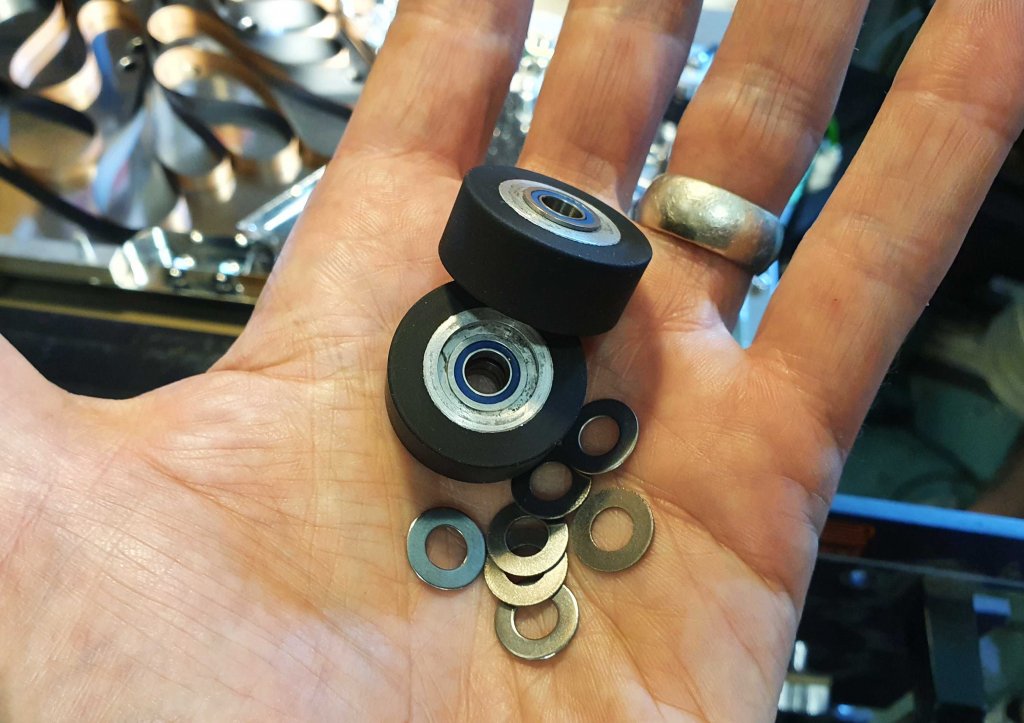
Roland Tape Echo Pinch Rollers
We need to talk about rubber, how to change it, and why it’s so important to the long term health and performance of your tape echo. And because size does matter.
We only ever fit freshly refurbished Roland rubber rollers in the machines we sell. We send the old rollers to be re-rubbered by the same people who refurbish rollers for studio multitracks, and we carefully replace the old bearings with high quality new parts.
This process is involved and takes a great deal more time and money than simply buying a new off the shelf replacement.
So why do it?
If it ain’t broke, don’t fix it – rubber performs better than any other pinch roller material (ever seen a studio tape machine using anything else?).
Rubber is tried and tested: it lasts and will maintain its performance for decades to come (there are machines with rubber rollers that are 50 years old and still running).
Finally, size does matter: we’ve seen motor issues caused by non-original/softer/slippier replacement rollers requiring more tension against the capstan.
Fresh rubber and new high quality bearings help us to achieve exceptional results in our Roland Echoes.
So if you care about sound quality and echo performance, fit a rubber roller. And when you consider a machine for sale, ask how old the pinch roller is and whether it’s been changed or refurbished by a professional?
[PURCHASE ONE OF OUR PINCH ROLLERS]
[SPACE & CHORUS ECHOES FOR SALE]
HOW TO CHANGE THE ROLLER
Still need to make a video, but these instructions plus the photos below should make it simple enough.
Before installation of new pinch roll please remove old pinch wheel and clean away any old grease and oxidation from the capstan. Isopropyl works very well. The old carbon bearings required a little grease however the new bearings we have installed do not. If not cleaned it could lead to tape wow and the pinch wheel unable to reach optimum performance.
Make sure you install the new roller with the side with the bearing slightly proud on the BOTTOM – so the top is indented.


The new pinch wheels are fitted with 3 new bearings, with the outer two flanged. Your new pinch wheel will require either 1 or 2 of the washers (technically they are “shims”) provided. We recommend installing both shims at first, double check the wheel spins freely. If not, remove 1 shim and finish installation.
Then you can put the screw and its own small washer back on top. Due to Roland’s manufacture process not every capstan is the same height therefore this is why you may need either 1 or 2 washers. A little up/down movement in the pinch wheel is fine. The key point is: if the wheel spins freely you’re good to go!


Related Posts

Amplify Your Studio Budget: Lock In 2025 IRS Deductions Now

Tascam M-208 & M-216 - How to Add Direct Outputs

Soundgas LFOmo Manual

Soundgas Type 636 Manual
Soundgas Type 636P2 Manual

Zero Head Gain Roland Tape Echoes
